
The Hidden Cost of DIY Music Licensing (Do-it-Yourself)
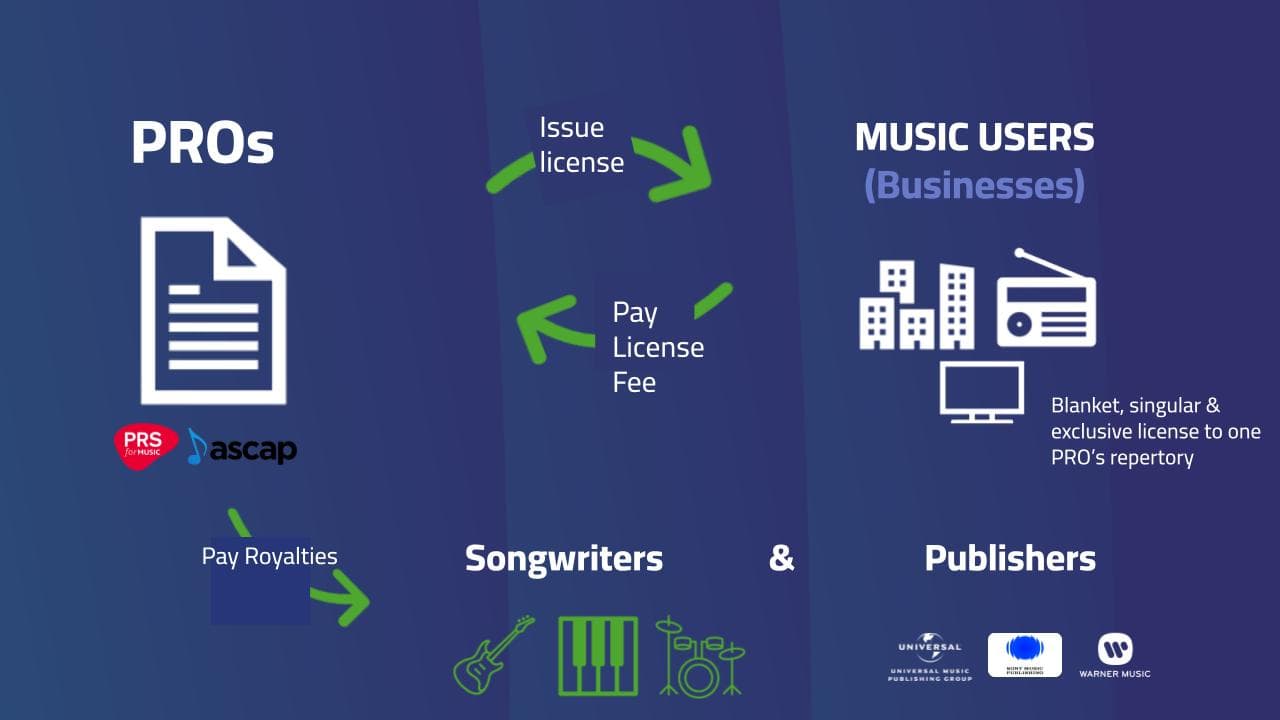
On paper, licensing music directly from rights holders sounds simple. The idea that you have to find out who owns the rights, pay them, and play the song. In practice, it's one of the most quietly expensive mistakes a hospitality or retail business can make, not only because the fees are outrageous, but because of what it takes to get complete coverage.
One song has multiple owners
Here's the part that surprises most business owners: a single artist's catalog is rarely controlled by a single rights organization. Take a mainstream, chart-topping artist like Post Malone, whose catalog spans dozens of hit singles. Because songs are frequently co-written by multiple songwriters, and those songwriters are often signed to different PROs, it's entirely normal for an artist's biggest hits to be split across Global Music Rights (GMR), ASCAP, BMI, and SESAC simultaneously, sometimes with different PROs covering different percentages of the same song, depending on how many writers contributed and who they're each affiliated with. That means a license from GMR alone might cover only part of that artist's catalog. To legally play his full discography, you'd need separate licenses from every PRO representing every co-writer on every track and that's just one artist. Multiply that across a realistic, varied venue playlist of a few hundred songs, and the licensing puzzle becomes genuinely difficult to solve on your own.
Even if you get the licensing right, you're not done
This is the part that catches even diligent business owners off guard. It’s worth noting that securing the licenses is only the first problem. Now let’s imagine you've done it properly by hiring a music-licensing lawyer, spent months (realistically, sometimes years) negotiating with multiple rights holders, and paid substantial upfront fees to lock in your permissions. You now legally own the right to play a large catalog of music. What you don't have is a way to actually play it. You still need to check the following boxes:
- A streaming or playback system that can deliver that music reliably to your venue
- Compliance tracking records of what's played, when, and proof your licenses remain current
- Ongoing reporting obligations to the PROs, which don't end once the license is signed
- A way to update and manage the catalog as your licenses, staff, and venue needs change
In other words: the legal work gets you permission. It doesn't get you a working sound system, a curated playlist, or a scheduling tool. Most businesses that go the DIY route end up needing to build or buy a whole separate technical solution on top of the licensing they just spent months securing.
Why generic royalty-free music isn't the shortcut it seems
Faced with all of this, some businesses take a different shortcut which is running the risk of using royalty-free or stock background music. It avoids the licensing maze entirely but it usually goes to show the lack of intentionality behind your brand. Generic, royalty-free catalogs are built to be inoffensive and legally safe, not to match your specific brand, concept, or atmosphere. For a venue trying to create a genuine mood such as a boutique hotel lobby, a cocktail bar, a fine-dining room, royalty-free or stock background music is rarely the sound you actually want.
The real math
Weigh the DIY path against a bundled B2B platform:
| DIY licensing | Royalty-free music | B2B Service (Lobby & Lounge) | |
|---|---|---|---|
| Legal/negotiation time | Months to years | None | None |
| Multiple PRO agreements needed | Yes | No | Waived (since we do not represent/stream their catalogues) |
| Playback/streaming system | Build separately | Basic | Included |
| Music quality/brand fit | High (if done right) | Often generic | Curated for hospitality |
| Ongoing compliance tracking | Your responsibility | N/A | Handled for you |
| Risk of gaps in coverage | High | Low | None |
The DIY path can technically get you there. It just tends to cost far more in time, legal fees, and ongoing management than most businesses expect going in. A commercial music service gets you full legal coverage and a working system, from day one, for one predictable monthly/annual fee.