
Why Your Personal Spotify/YouTube Account Won't Cut It
It's one of the most common shortcuts in hospitality and retail: open a personal streaming account, plug in a speaker, and call it background music. It's also, quietly, one of the most common legal exposures a small business carries without realizing it.
It's not a gray area
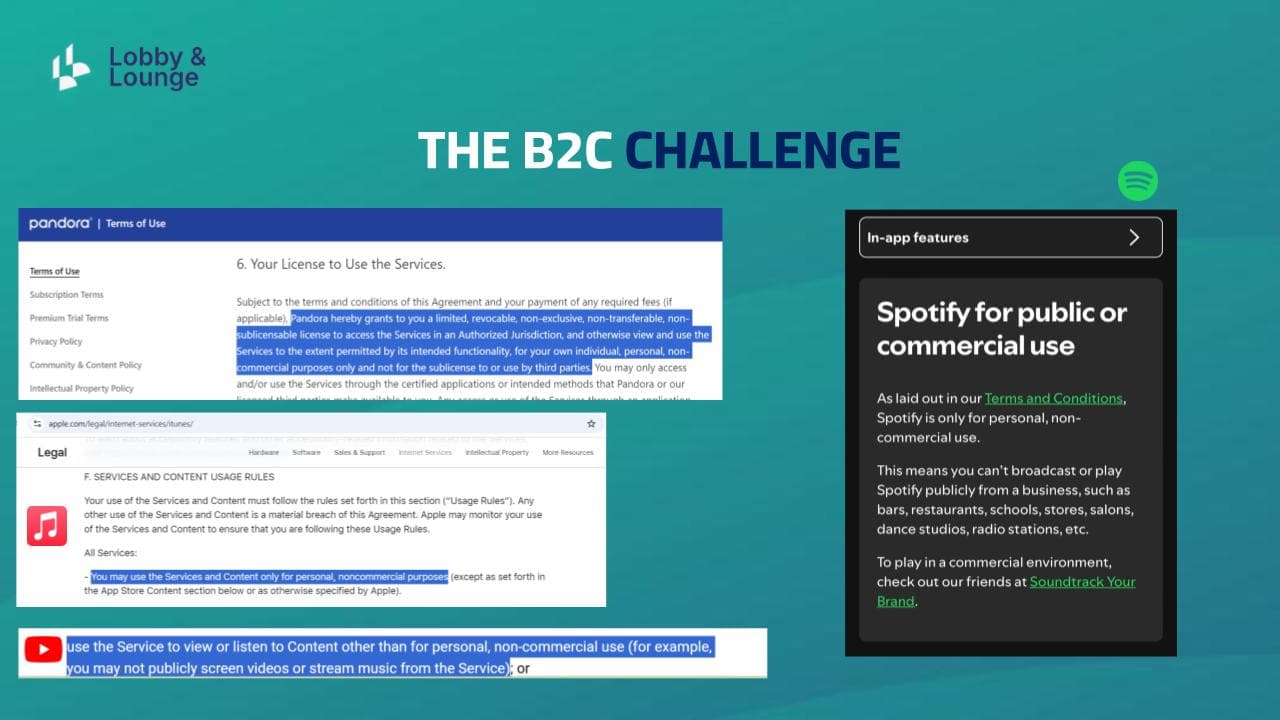
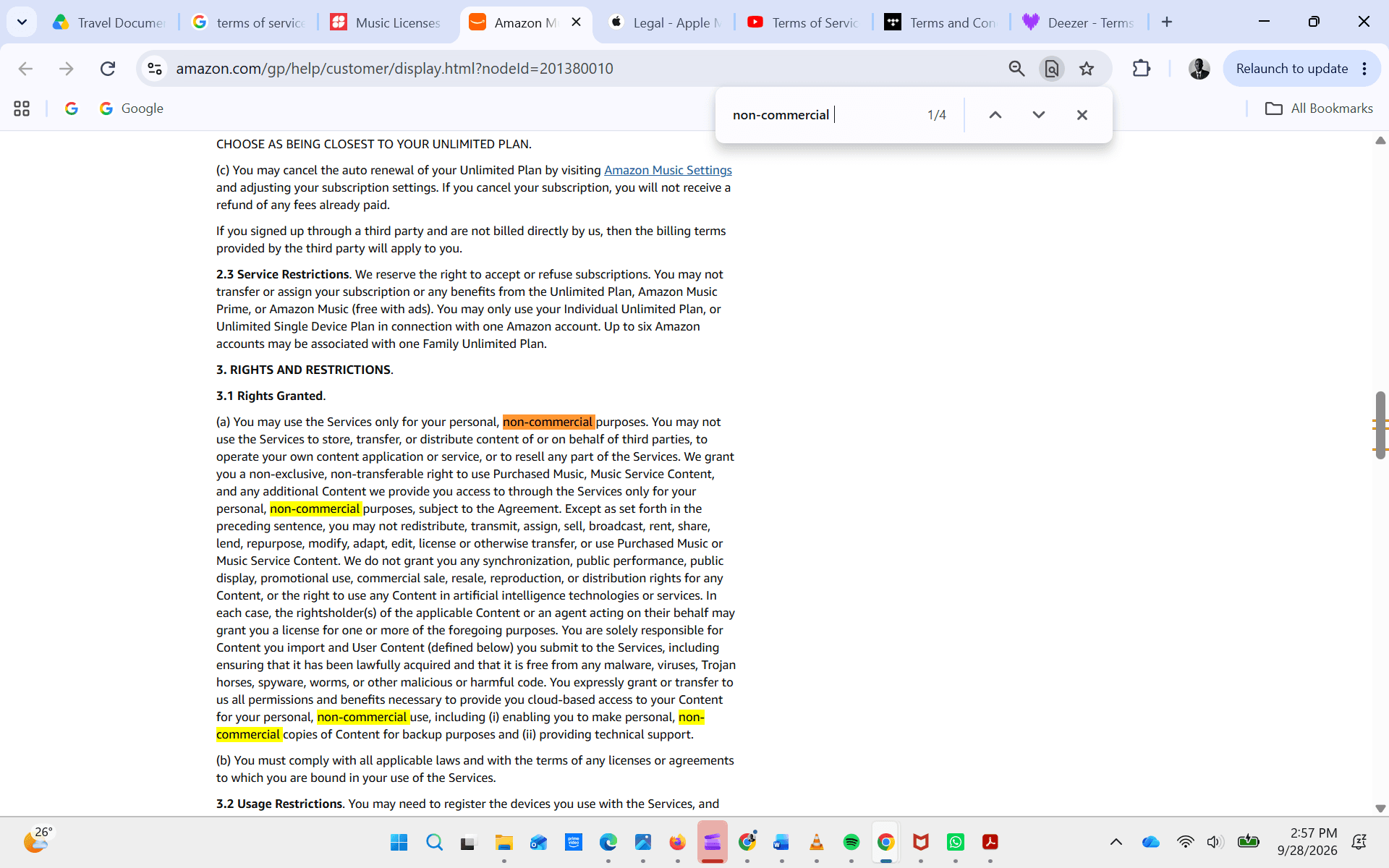
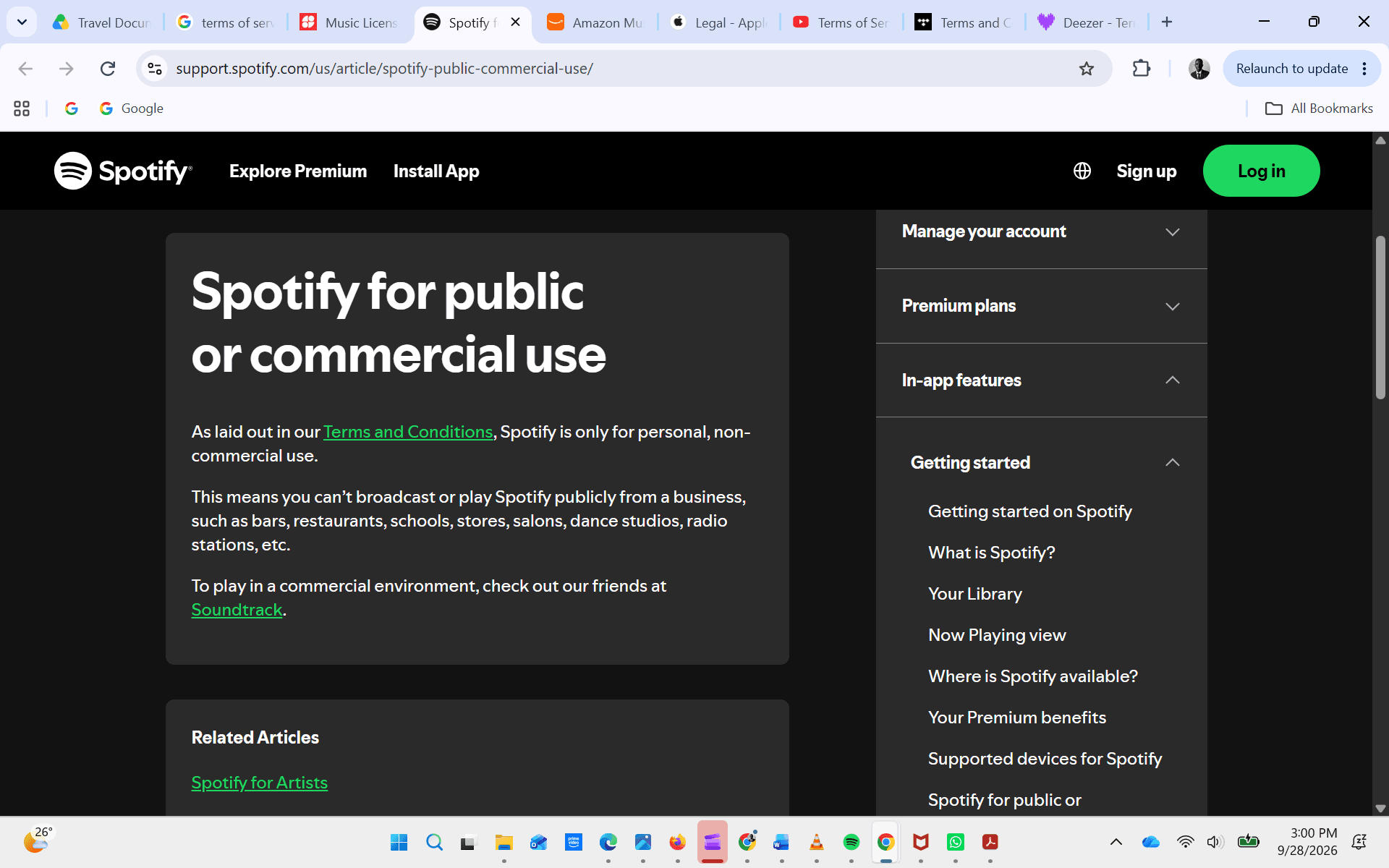
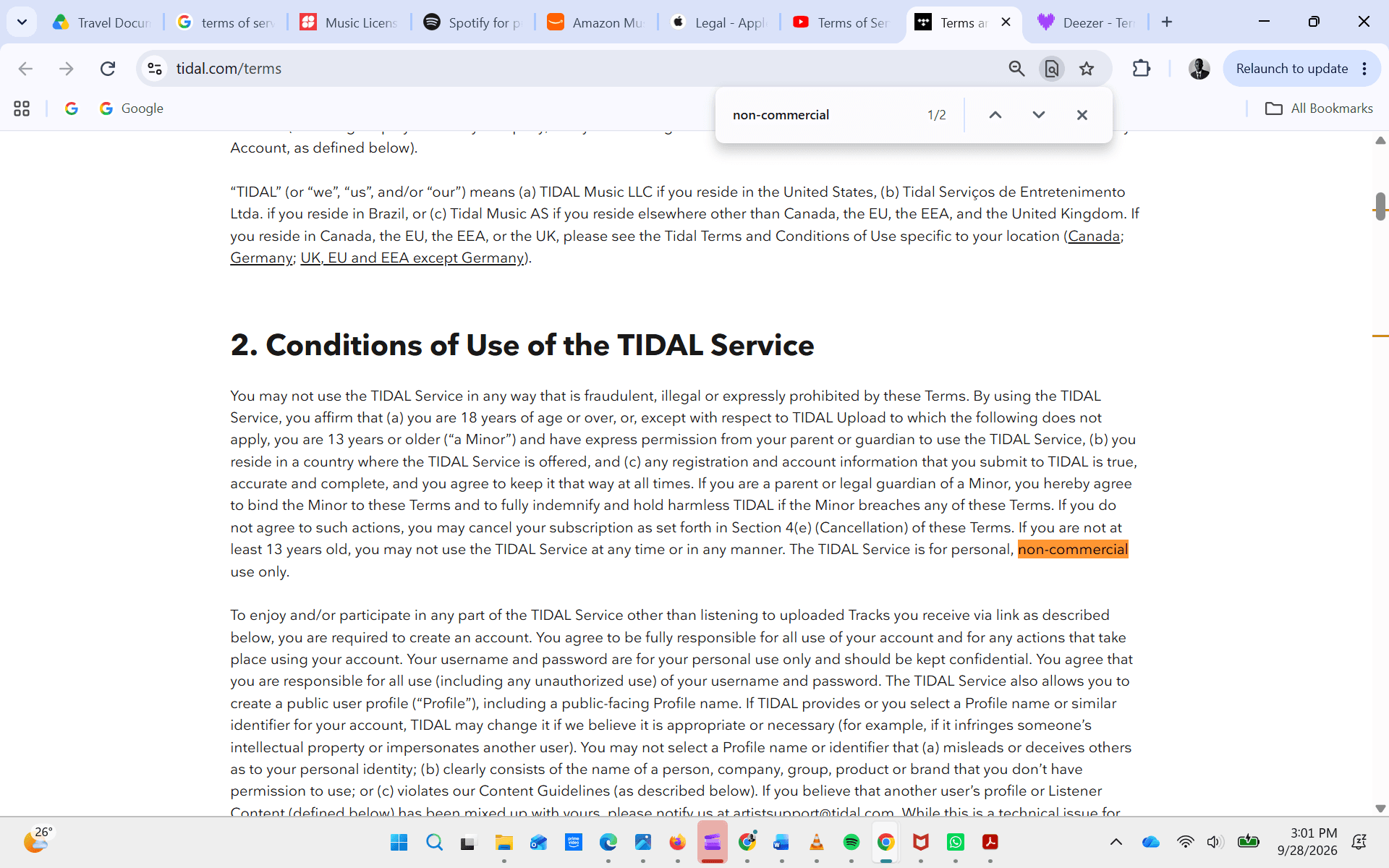
However tempting it is to simply use a personal Spotify, YouTube Apple Music, or similar non-commercial account for background music in your venue, this approach is legally unsound. While it is not only a minor technicality, it’s also a direct breach of what those platforms actually license. This breach is clearly stated in their Terms of Service document/page. Terms of service (ToS) are legal contracts between a service provider and a user that set the rules for using a website, app, or software. Below is a list of each one of them: YouTube Terms of Service ; Spotify for public or commercial use ; Apple Media Services Terms and Conditions ; Deezer Terms and Conditions of Use ; TIDAL Terms and Conditions of Use ; Amazon Music Terms of Use
Every major consumer streaming service licenses music for private, non-commercial listening only. That's a person, listening for themselves, at home or on the move. It is explicitly not a license to broadcast that music into a space where customers, guests, or the public can hear it.
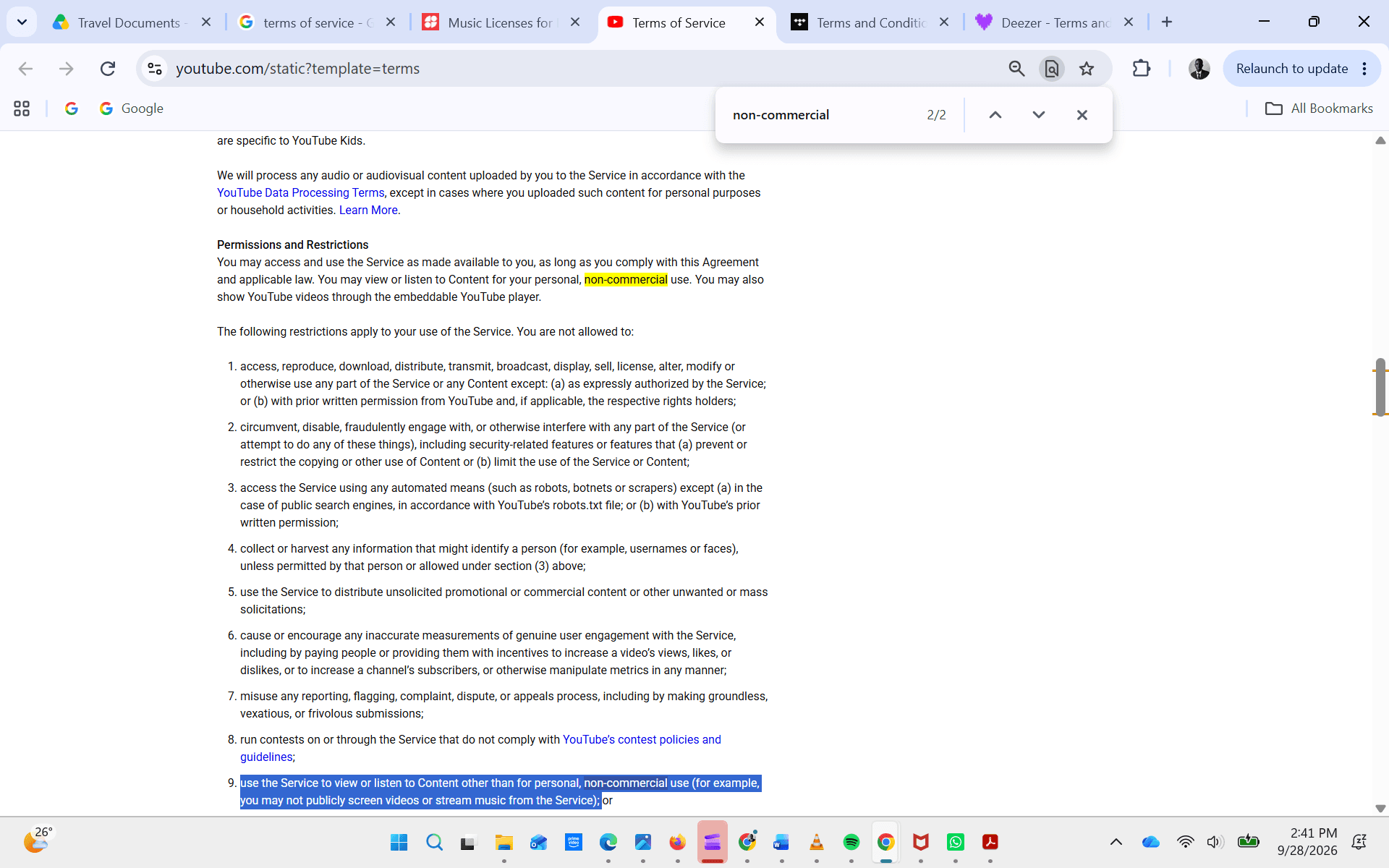
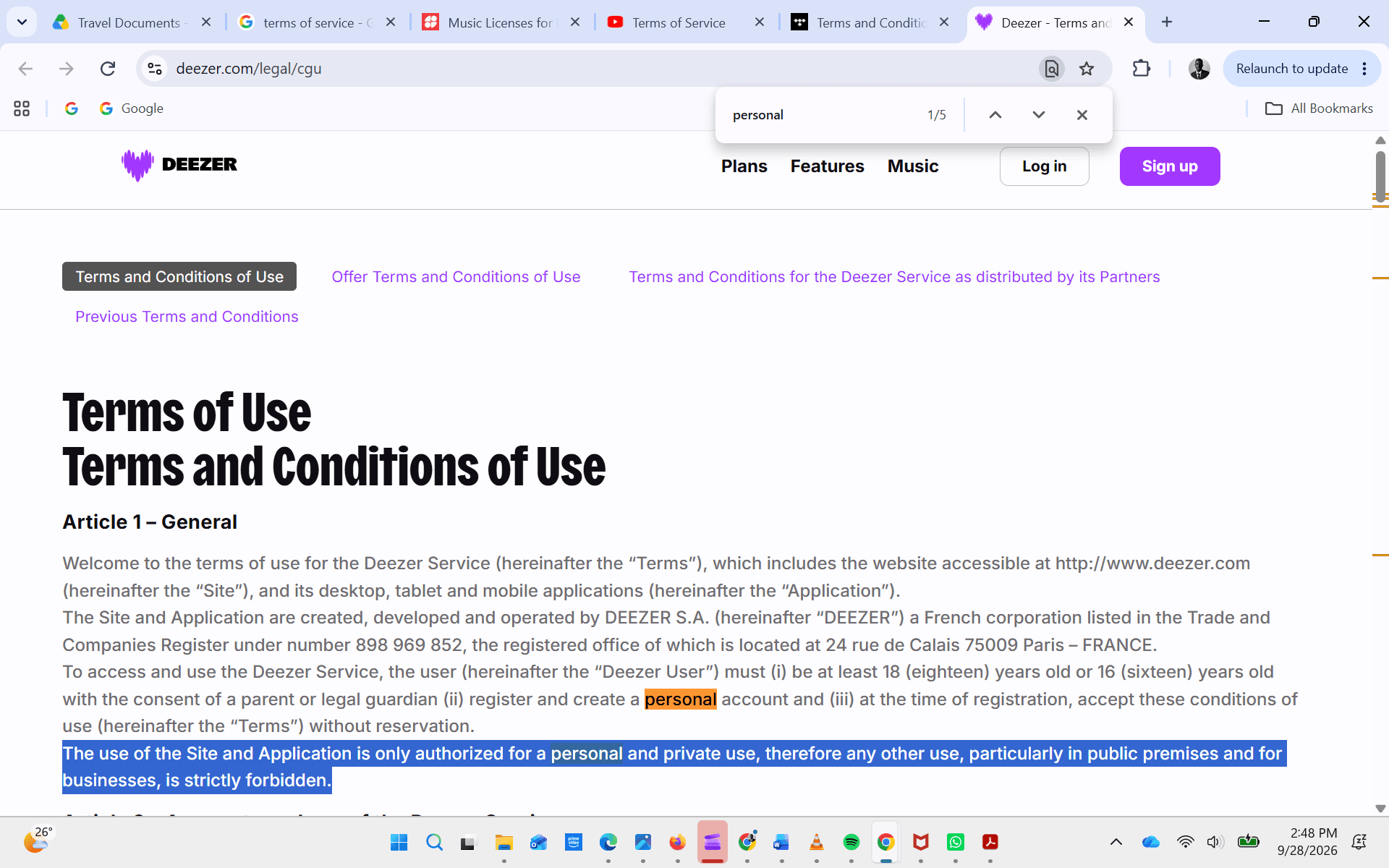
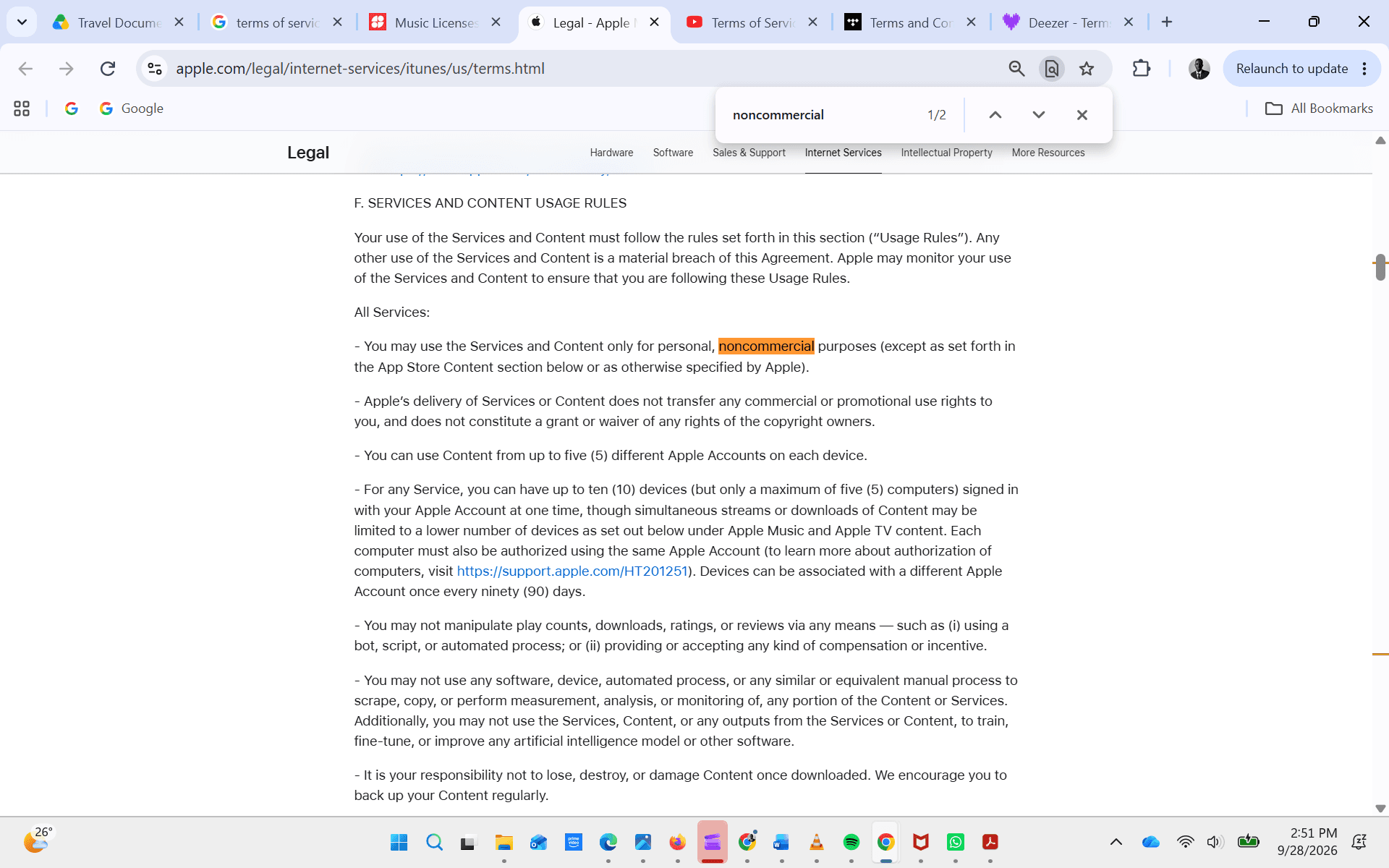
This applies whether the account is playing through a single Bluetooth speaker in a small café or piped through a multi-zone system in a large hotel. Business use of a personal account isn't a smaller version of what's allowed since it's simply not covered at all.
Even if you solve licensing, you still need a way to play the music
Here's a scenario worth sitting with: suppose you take licensing seriously and do it properly. You hire a lawyer experienced in music rights. You spend months and realistically, for a broad catalog, it can take years negotiating with multiple rights holders and PROs. You pay substantial upfront fees. You finally have full legal permission to play the music you want. You now have an expensive, properly licensed music collection and a completely separate problem: you still need a way to actually deliver it into your venue.
That means:
- A streaming or playback system built for commercial use
- A method for scheduling and organizing music across different times of day and different zones
- Ongoing compliance tracking and reporting to stay in good standing with the PROs you negotiated with
- Someone responsible for managing and updating all of it, indefinitely
Licensing and playback are two separate problems, and solving the first doesn't solve the second. A personal Spotify account solves neither.
No platform, blog, storefront, or studio is exempt
This isn't limited to restaurants and bars. Any business incorporating music into the customer experience such as a mobile app, a blog with background audio, a retail storefront, a fitness studio carries the same requirement of securing the necessary permissions and fairly compensating the people who hold the rights to that music. The venue type changes however, the underlying obligation doesn't.
What a proper solution actually needs to do
A real answer to background music for business has to solve both halves of the problem at once:
- Full public performance licensing covering composition and recording rights, across the relevant PROs, with no gaps
- A working playback and scheduling system that actually gets curated, brand-appropriate music into your space, zone by zone, daypart by daypart
That's the gap a B2B music streaming service like Lobby & Lounge Music is built to close. Instead of a personal account that exposes your business to risk, or a multi-year DIY licensing project that still leaves you needing a delivery system, you get both pieces, fully licensed, curated, and ready to schedule in a single subscription.
Key Takeaway
A personal streaming account feels free and easy at the moment. However, this isn't actually free of risk, and it was never designed to solve the problem you're using it for. The businesses that get this right aren't the ones spending years untangling rights holders. They're the ones who moved straight to a platform that already has.