
Real Lawsuits: What Actually Happens When a Business Gets Caught
It is easy to treat music licensing as a theoretical risk. In other words, something that happens to other businesses, or a rule nobody really enforces. Court records say otherwise. This article highlights real, documented cases brought against restaurants and bars for playing unlicensed music, and what they show about how this actually plays out.
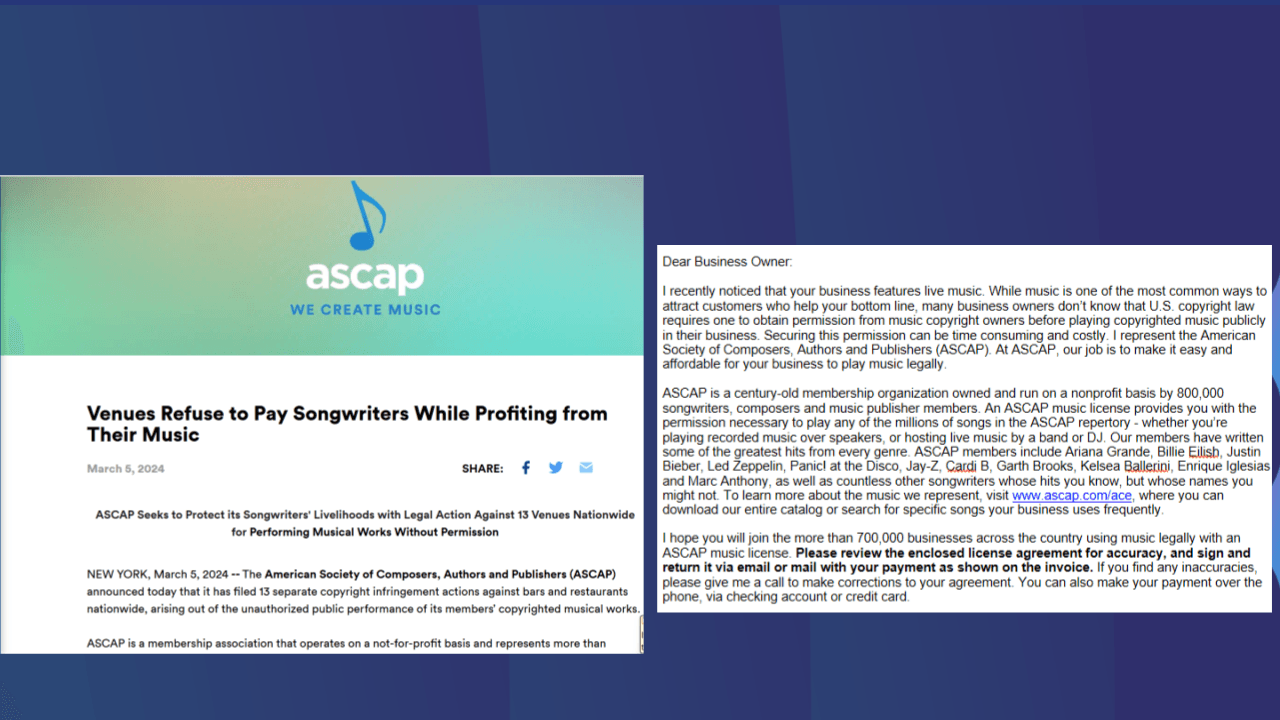
Warnings come first, lawsuits come later
Almost every case on record follows the same sequence, and it's worth knowing because it means a lawsuit is rarely a surprise to the business it's filed against:
- A PRO (ASCAP, BMI, SESAC, or GMR) identifies a venue playing music without a license, often through field representatives, private investigators, or by monitoring a venue's advertising and social media for live music or DJ nights.
- The PRO makes repeated contact attempts (phone calls and letters) offering to sell the business a license.
- If those attempts go unanswered or are refused, the PRO documents specific instances of unlicensed songs being played (often via an investigator's visit) and files suit.
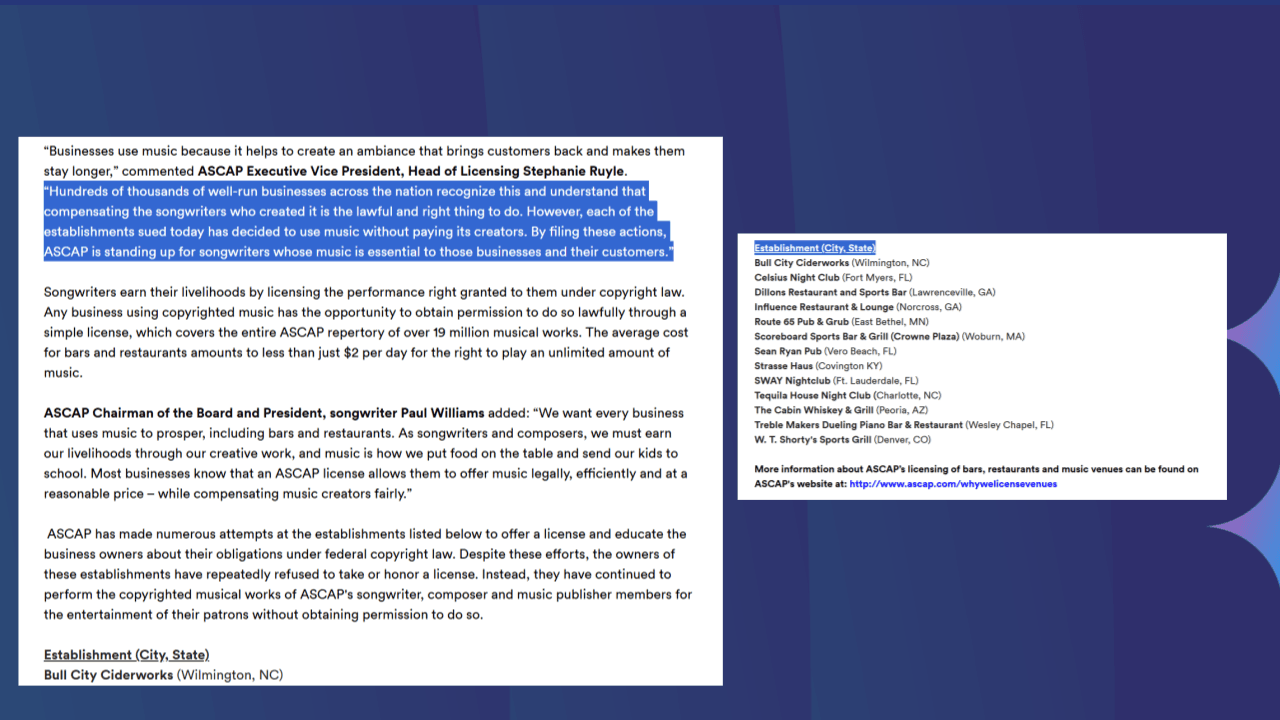
Dam Bar, Port Angeles, WA. ASCAP filed suit after documenting unlicensed music, following what its legal counsel said were more than 15 separate attempts to contact the owner and staff about obtaining a license. The case was one of 11 ASCAP filed against bars, restaurants, and music venues nationwide in a single month. It settled for $8,500 in licensing fees and legal costs.
Plan B Burger, Glastonbury, CT. BMI sued the restaurant's operating companies over just seven unlicensed songs played at a single location, including well-known tracks from Queen and Lynyrd Skynyrd. The same reporting found a string of other Connecticut restaurants and bars including a wine bar, an inn, and multiple pubs that had settled or reached judgments with BMI, with at least one disclosed settlement of $18,000.
Lake Street Bar & Grill, Kirkland, WA. BMI brought suit over four instances of unauthorized public performance, seeking statutory damages. Because the claim alleged willful infringement, the business faced potential damages up to $150,000 under federal copyright law (for four songs)
Bar 330, Brea, CA. Sued in federal court by attorneys representing several recording companies after an investigator documented three unlicensed songs played in a single visit. The complaint alleged ASCAP had already warned the business that a license was required before the visit took place.
Paulie's Upper Deck Sports Grill, Redondo Beach, CA.
A similar case: five songs, documented in a single visit by an investigator, after the business had allegedly been warned a license was needed. Because the business continued playing music after being warned, the case alleged willful infringement which carries substantially higher potential damages.
What the numbers actually mean
Under 17 U.S.C. § 504(c), US courts can award statutory damages of $750 to $30,000 per infringed work, and that figure rises to up to $150,000 per work where willfulness is established. This is per song, not per lawsuit, which is why cases involving even a handful of tracks can carry six-figure exposure on paper. Courts don't always award the maximum, and many cases settle for far less but the settlements on record (several thousand to tens of thousands of dollars) still dwarf the cost of a standard annual PRO license, which is typically a fraction of that amount.
Beyond the statutory damages themselves, businesses found liable can also be ordered to cover the rights holders' attorneys' fees and court costs under a separate provision, meaning the total cost of losing a case is rarely just the damages figure.
What these cases have in common
A few patterns worth taking seriously:
- Multiple contact attempts before legal action. None of these businesses were sued out of nowhere; each had been offered a license first, sometimes repeatedly, and either declined or didn't respond.
- Small numbers of songs, real exposure. These aren't cases about a business playing unlicensed music for years undetected several involve a single investigator visit and a handful of specific tracks.
- Willfulness matters a lot. Businesses that continued playing music after being explicitly warned faced allegations of willful infringement of the category carrying damages up to $150,000 per song, rather than the lower $750-$30,000 range.
- PROs actively monitor, not just react. Field checks, investigators, and social media monitoring for advertised live music or events are standard practice, not rare enforcement sweeps.
Key takeaway
None of these businesses set out to break copyright law. Most of them simply had not taken the pain to get around to licensing, assumed a personal streaming account was sufficient, or figured they were too small to be noticed. The lawsuits happened anyway, and in every documented case, a license offered well in advance of legal action was available and declined or ignored. The gap between "we'll deal with it eventually" and an actual court filing is smaller, and more real, than most business owners assume.